How to Make Your First $1,000 Online in 2026 (Step-by-Step Guide)
Learning how to make money online feels overwhelming when you’re just starting out. There are hundreds of methods being promoted every day, most promising fast, effortless income — and almost none of them explain what it actually takes to get your first real dollars in the bank.
This guide breaks it down into a realistic, step-by-step path. Whether your goal is a small side income or the beginning of a full online business, the process to make money online for the first time follows the same basic logic: pick one method, learn the fundamentals, and execute consistently until you land your first paying result.
Part of the confusion comes from how the topic is marketed. Search for “make money online” and you’ll find a mix of genuinely useful guides, recycled listicles, and outright scams promising thousands of dollars for almost no effort. This guide sticks to methods that are boring in the best possible way: they require real, learnable skills, they take weeks rather than hours, and they’re the same approaches that consistently work for beginners year after year, regardless of which platforms happen to be trending.
Why $1,000 Is the Right First Goal
A thousand dollars isn’t life-changing money, but as a first milestone, it’s powerful for a different reason: it proves the system works. Once you’ve made money online once, doing it again — and scaling it — becomes far less intimidating.
Most people who try to make money online and quit don’t fail because the method didn’t work. They fail because they switch strategies every few weeks, never giving any single approach enough time to produce results. Setting a specific, achievable target like $1,000 keeps you focused on one path long enough to see it through.
This isn’t a fringe path anymore, either. According to the Bureau of Labor Statistics’ Contingent Worker Supplement, 7.4% of the U.S. workforce worked as independent contractors as their main job in 2023, part of a broader alternative-work economy that includes freelancers, on-call workers, and contract-based earners.
Step 1: Pick One Method to Make Money Online
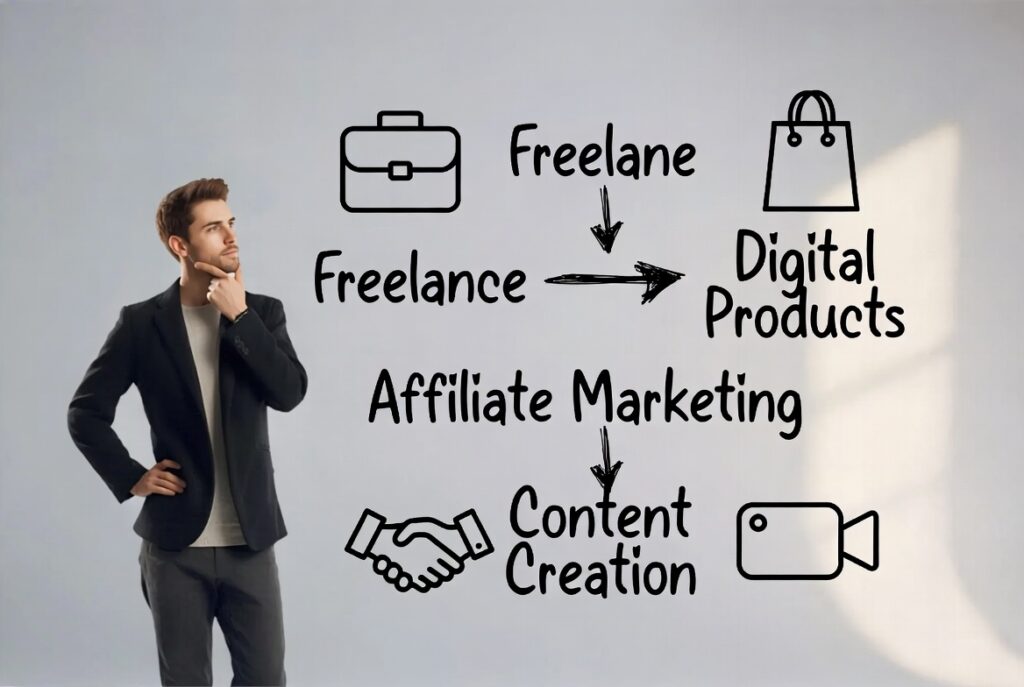
There are dozens of legitimate ways to make money online in 2026, but trying all of them at once guarantees failure. The most reliable beginner-friendly paths include:
Freelance services — writing, design, editing, or virtual assistance sold directly to clients. This is usually the fastest path to a first payment, since you’re selling to one specific buyer rather than waiting for an audience to form.
Selling digital products — templates, guides, spreadsheets, or presets sold repeatedly with no inventory or shipping involved. Slower to set up, but each sale afterward requires almost no additional work.
Affiliate marketing — recommending products you already trust and earning a commission per sale, usually through a blog, social account, or email list you’re already building for another reason.
Content creation — building an audience on one platform and monetizing through ads, sponsorships, or your own products once that audience is large enough to matter.
Pick just one. Every method to make money online has its own learning curve, and splitting your attention between several at the beginner stage is one of the most common reasons people give up before seeing results. If you’re not sure which one fits you, our guide to the most valuable skills to earn more money can help you match a method to something you’re already reasonably good at.
Step 2: Learn the Skill Behind the Method
No method to make money online works without an underlying skill. Freelancing requires a marketable ability like copywriting or design. Affiliate marketing requires understanding how to build trust and drive traffic. Content creation requires consistency and basic editing or storytelling skills.
Spend your first two to three weeks focused entirely on learning, using free resources, tutorials, and real examples from people already succeeding in that specific method. Resist the urge to skip straight to “selling” before you have anything valuable to offer. If you’d rather build a single, deep skill before choosing a monetization path, our breakdown of how to build a high-income skill in 2026 walks through that approach in more detail.
This learning phase doesn’t need to be expensive or formal. Studying a handful of successful examples in your chosen method — freelance profiles that consistently win clients, digital products with strong reviews, or content creators in your niche — will teach you more about what actually works than a generic course, simply because you’re studying real, current results instead of theory.
Step 3: Create Your First Offer
Once you have a basic skill, package it into something simple and sellable. This could be a freelance service listed on a marketplace or offered directly to small businesses, a basic digital product like a template or short guide, or a simple piece of content that includes an affiliate link relevant to your audience.
Your first offer doesn’t need to be perfect. The Small Business Administration’s guidance on writing a business plan emphasizes starting with market research and a minimal, testable version of an offer, then refining it based on real feedback rather than trying to perfect it before anyone has seen it.
Step 4: Get in Front of the Right People
This is the step most beginners skip, and it’s the one that actually determines whether you make money online or not. Having a great skill or product means nothing if nobody sees it.
Start small and specific: reach out directly to 10-20 potential clients or customers per day if freelancing, post consistently in communities where your target audience already spends time, and use short-form content to demonstrate your skill or product publicly.
Consistency here matters more than perfection. Ten thoughtful outreach messages a day for two weeks will outperform one “perfect” pitch sent once. The goal in this step isn’t to convince everyone — it’s to get enough real conversations happening that you learn what your specific audience actually responds to, which is information no amount of planning in isolation can give you.
Most beginners underestimate how many “no” responses come before the first “yes.” Treating early rejections as data rather than failure keeps the process moving instead of stalling out after the first few quiet days.
Comparing the Beginner-Friendly Paths
| Method | Startup Cost | Typical Time to First Sale |
|---|---|---|
| Freelance services | $0 | 1–4 weeks |
| Digital products | $0–$50 | 4–8 weeks |
| Affiliate marketing | $0 | 4–12 weeks |
| Content creation | $0–$100 | 8–16 weeks |
Step 5: Close Your First Sale and Reinvest
The moment you make your first dollar online, the psychology shifts. It’s no longer theoretical — you have proof the system works for you specifically, in your niche, with your skill set.
From there, the path to your first $1,000 is really just repetition: take what worked in your first sale, refine it slightly, and repeat it more efficiently. Reinvest early earnings into better tools, more targeted outreach, or basic advertising once you understand what converts. It’s also worth treating a portion of that first income the same way you would any new cash flow — our guide on saving your first $500 in 30 days covers how to turn early, irregular income into a real financial cushion instead of letting it disappear.
One practical detail beginners often overlook: once your online income adds up, it becomes taxable. The IRS’s guidance on managing taxes for gig work explains that you must report net earnings of $400 or more from self-employment or gig-style income, even if it’s a side project rather than a full-time job. Keeping simple records from day one avoids a stressful surprise later.

Realistic Timeline: How Long Does It Take?
For most beginners dedicating 10–15 hours a week, reaching the first $1,000 online typically takes between 60 and 120 days. This depends heavily on the method chosen, the amount of direct outreach done, and how quickly the first offer gets refined based on real feedback.
The biggest variable isn’t talent — it’s consistency. People who treat this like a real, if small, business, with a routine and a clear next action every day, consistently outperform those who only work on it “when they feel motivated.” If your schedule is genuinely tight, starting with one of these low-commitment side hustles you can start this weekend can help you build the habit before committing to a bigger method.
It also helps to track leading indicators, not just income. In the first month, that means outreach messages sent, content pieces published, or products listed — activities you fully control. Income itself is a lagging indicator that responds to those actions with a delay, and beginners who only measure dollars earned in week one often quit before the delay has had time to play out.
A Word of Caution on “Guaranteed” Income Offers
As you research methods, you’ll run into ads and messages promising guaranteed income, secret systems, or six-figure results with little effort. These offers tend to share a pattern: urgency to join quickly, vague descriptions of what the work actually involves, and a request for payment before you’ve seen any real evidence it works.
The FTC’s guide to money-making opportunity scams is worth reading before you pay for any course, system, or “starter kit” — a genuine method to make money online never requires you to pay upfront for the opportunity to earn. If something you’re considering asks for money before you’ve earned anything, treat that as a reason to slow down, not a reason to act fast.
Frequently Asked Questions
How much money do I actually need to start? For the four methods covered here, close to nothing. Freelancing, affiliate marketing, and most content creation require only time and an internet connection. Digital products may involve a small one-time cost for design or hosting tools.
Which method is fastest for a total beginner? Freelance services typically produce the fastest first sale, since you’re selling directly to a specific client rather than waiting for an audience or search traffic to build.
Do I need to register a business to start? Not immediately for most beginners. Many people start as a sole proprietor by default. Once income becomes consistent, it’s worth reviewing the IRS self-employment guidance to understand your reporting obligations.
Is it normal to not make money in the first few weeks? Yes. Most beginners spend their first two to three weeks learning the underlying skill before their first paid result, which is a normal and necessary part of the process, not a sign of failure.
How do I know if an opportunity is a scam? Any offer that requires you to pay money upfront to “unlock” the ability to earn, guarantees a specific income, or pressures you to join quickly shows the classic warning signs the FTC outlines for income scams.
Can I combine more than one method later? Yes, but only after your first method is producing consistent results. Adding a second income stream too early is one of the most common reasons beginners spread themselves too thin and quit both.
What should I do with my first $1,000? Many people reinvest a portion into tools or outreach that helped generate the income, while setting the rest aside as the start of a small emergency fund.
Should I quit my main job to focus on this full-time? Not at this stage. Building this alongside existing income removes the financial pressure that causes most people to make rushed, short-term decisions instead of sticking with one method long enough for it to work.
Final Thoughts
Making your first $1,000 online in 2026 isn’t about finding some secret shortcut — it’s about choosing one proven method, learning the fundamentals, and staying consistent long enough for results to show up. Every successful online income story starts exactly here.
We’re also planning something bigger for those who want to go further: an upcoming course right here on the site walking through exactly how we built and started monetizing this very blog, step by step. If that interests you, keep an eye on future posts — we’ll share it as soon as it’s ready.
About the Author Lucas is the founder and editor of Info Is The Key. He researches and writes across money, world affairs, and practical skills, turning that research into clear, actionable information readers can use right away.
Last Updated: August 2026 | Reading Time: 10 minutes
Sources
- U.S. Bureau of Labor Statistics, Contingent and Alternative Employment Arrangements
- U.S. Small Business Administration, Write Your Business Plan
- Internal Revenue Service, Manage Taxes for Your Gig Work
- Federal Trade Commission, Money-Making Opportunity Scams