In May 2026, a cruise ship sailing through the South Atlantic became the center of a global health scare. Passengers and crew began falling critically ill. Three people died. The culprit: hantavirus — a little-known but potentially deadly disease that had just made a dramatic return to the world’s attention.
Within days, “hantavirus” had entered Google’s global top 25 most searched terms, with over 72 million searches per month. Social media was flooded with questions: What is it? How does it spread? Should I be worried?
If you’ve been asking the same questions, this article has the answers — straight from the CDC and the World Health Organization.
What Is Hantavirus?
Hantavirus is a group of viruses carried primarily by rodents. The name comes from the Hantan River in South Korea, where an early strain was identified in the 1970s. Since then, scientists have identified dozens of hantavirus strains around the world, each associated with a specific rodent host.
In North and South America, hantavirus is most commonly associated with Hantavirus Pulmonary Syndrome (HPS) — a severe respiratory illness that attacks the lungs and can be fatal. In Europe and Asia, the virus tends to cause a different condition called Hemorrhagic Fever with Renal Syndrome (HFRS), which primarily affects the kidneys.
The most dangerous strain in the Americas is the Andes virus (ANDV), found in Argentina and Chile, which is the only known hantavirus strain capable of spreading directly from person to person.
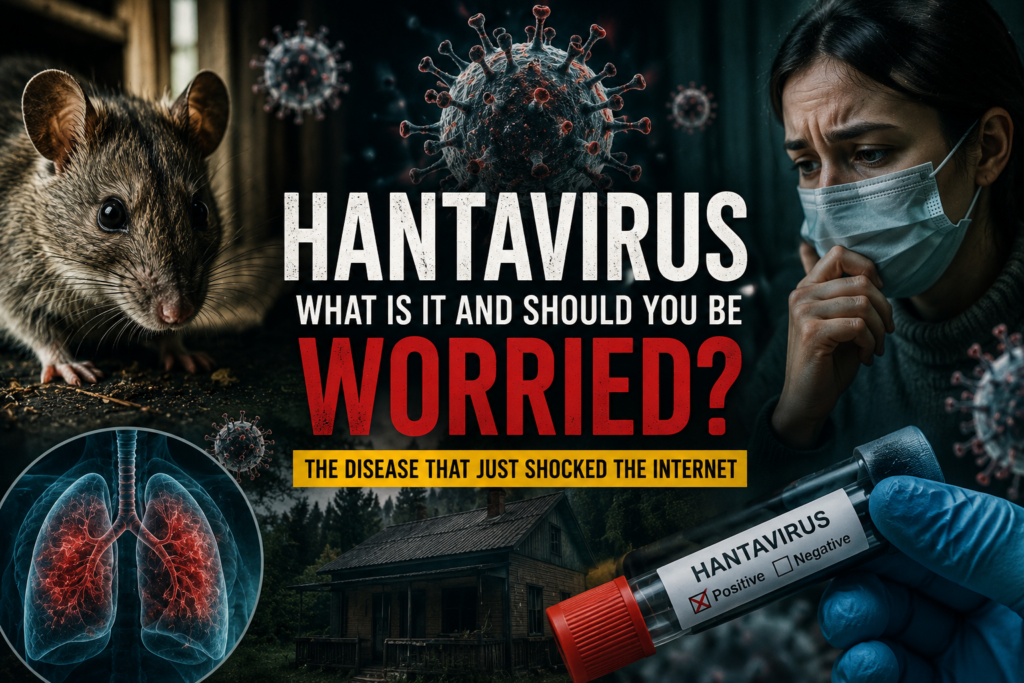
The 2026 Outbreak: What Happened on the Cruise Ship?
On May 2, 2026, the World Health Organization was notified of a cluster of severe respiratory illness among passengers and crew aboard a Dutch expedition cruise ship — the MV Hondius — sailing in the South Atlantic. The ship had departed from Ushuaia, Argentina on April 1 and visited remote locations including Antarctica, South Georgia Island, and Tristan da Cunha, carrying 147 passengers and crew from 23 different countries.
By May 12, eleven cases had been confirmed or suspected, and three people had died. Laboratory tests identified the cause as the Andes virus.
The WHO’s working hypothesis was that the first patient — referred to as “Case 1” — had likely picked up the virus before boarding, through environmental exposure during activities in Argentina. From there, evidence pointed to human-to-human transmission among passengers on the ship. This is what made the outbreak particularly alarming to health authorities: the Andes virus’s ability to spread between people, even if rarely, sets it apart from virtually every other hantavirus strain.
The CDC, ECDC, and WHO all assessed the global risk to the general public as low — but the outbreak was enough to put the world on alert.
How Does Hantavirus Spread?
For most hantavirus strains, transmission to humans follows a single path: infected rodents.
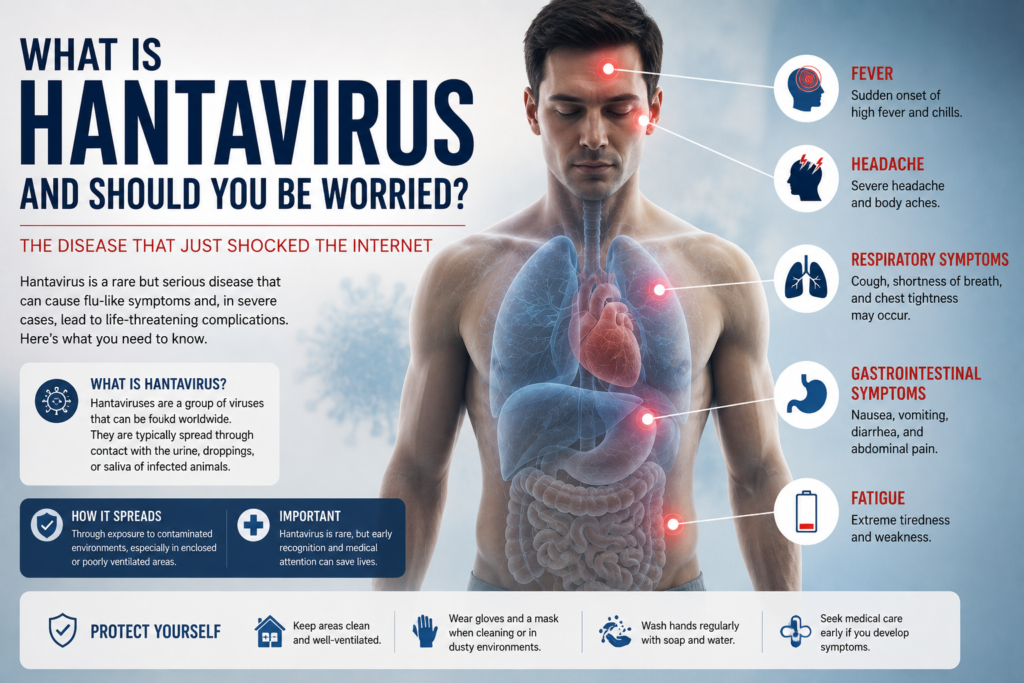
The virus is shed in the urine, droppings, and saliva of infected animals. Humans typically become infected by:
- Inhaling contaminated dust — the most common route, especially when cleaning enclosed spaces where rodents have been active
- Direct contact with infected rodent material, followed by touching the eyes, nose, or mouth
- Rodent bites or scratches, though this is rare
The deer mouse (Peromyscus maniculatus) is the primary carrier in the United States. An estimated 15% of deer mice in North America carry hantavirus.
The Andes virus is the exception. It can spread through prolonged, close contact between people — similar to how a respiratory virus spreads — particularly in household settings or healthcare environments where proper protective equipment is not used.
For a detailed overview of hantavirus, including symptoms, transmission, and treatment options, visit the Centers for Disease Control and Prevention (CDC).
What Are the Symptoms of Hantavirus?
Hantavirus symptoms can take anywhere from one to six weeks to appear after exposure, which makes early detection difficult.
The illness typically unfolds in two stages:
Early stage (days 1–5):
- Fatigue and tiredness
- Fever and chills
- Muscle aches, especially in the thighs, hips, back, and shoulders
- Headache
- Nausea, vomiting, or diarrhea
- Dizziness
At this stage, hantavirus looks almost identical to the flu — which is part of what makes it dangerous.
Late stage (days 4–10):
- Sudden shortness of breath
- Fluid accumulation in the lungs
- Low blood pressure
- Rapid progression to respiratory failure
The transition from early to late stage can happen very quickly. This is why medical professionals emphasize: if you suspect hantavirus exposure, seek care immediately — do not wait for symptoms to worsen.
How Deadly Is Hantavirus?
Hantavirus is not something to take lightly. Among patients who develop the full respiratory form of HPS:
- The case fatality rate is approximately 38%, according to the CDC
- The Andes virus, which caused the 2026 outbreak, carries an estimated mortality rate of 20 to 40%
- Since 1993, a total of 890 laboratory-confirmed cases of hantavirus have been reported in the United States alone
There is currently no licensed antiviral treatment for hantavirus. Treatment is entirely supportive — meaning doctors manage the symptoms, provide oxygen, and support organ function while the immune system fights the infection. Early hospitalization significantly improves survival chances.
Should You Be Worried?
The short answer is: probably not — but you should be informed.
Health authorities including the CDC, WHO, and ECDC all assessed the global risk from the 2026 cruise ship outbreak as extremely low for the general public. The outbreak was contained within a specific travel context, and the broader spread of Andes virus outside South America is considered very unlikely.
That said, there are situations where awareness genuinely matters:
- If you live in or plan to visit rural areas with high rodent populations — particularly in the western and southwestern United States, Argentina, Chile, or Paraguay
- If you’re cleaning out a cabin, shed, barn, or other enclosed space that may have rodent activity
- If you recently traveled to South America and are experiencing flu-like symptoms
In these cases, knowing about hantavirus could save your life — because acting quickly is the single most important factor in survival.
How to Protect Yourself
Prevention is straightforward and effective. The CDC recommends the following:
- Seal gaps and holes in your home to prevent rodent entry
- Use traps inside your home if you suspect rodent activity
- Ventilate closed spaces before entering — open doors and windows for at least 30 minutes
- Never dry sweep or vacuum areas with rodent droppings — this disperses virus particles into the air
- Wet down contaminated areas with a disinfectant before cleaning
- Wear gloves and a mask (N95 or higher) when cleaning rodent-infested areas
- Avoid camping or sleeping near rodent burrows or areas with visible rodent activity
Healthcare workers treating potential hantavirus patients should follow strict infection prevention protocols, particularly with Andes virus cases.
Why Is Hantavirus Trending in 2026?
The 2026 cruise ship outbreak was unusual for several reasons that combined to produce a perfect storm of public attention.
First, a cruise ship carrying passengers from 23 countries became a floating disease cluster — creating an immediate international dimension. Second, the Andes virus’s capacity for human-to-human transmission raised the specter, even if briefly, of a different kind of outbreak. Third, the locations involved — Antarctica, South Georgia, the South Atlantic — added an element of remoteness and adventure that captured the public imagination.
None of this means hantavirus is the next global pandemic. But it is a reminder that viruses do not respect borders, and that even rare diseases deserve public understanding.
Conclusion: Knowledge Is the Best Protection
Hantavirus has been part of the natural world long before the 2026 outbreak brought it back into global headlines. It is dangerous, it can be fatal, and there is no cure — but it is also largely preventable through awareness and basic precautions.
The world’s sudden curiosity about hantavirus, reflected in over 72 million Google searches, is not a sign of panic. It’s a sign that people want to understand what’s happening around them. And that instinct — to seek information — is exactly the right one.
Stay informed. Stay cautious. And if you ever suspect exposure, seek medical care immediately.
Enjoyed this article? Explore more in-depth explainers and global news analysis at Info Is The Key — your source for clear, well-researched information about the world.
Sources: CDC, World Health Organization (WHO), European Centre for Disease Prevention and Control (ECDC), Johns Hopkins Medicine Tags: hantavirus, Andes virus, infectious disease, health, 2026 outbreak, curiosity, science Category: Curiosity