Why Your Brain Makes Bad Decisions After 3 PM: Decision Fatigue Explained
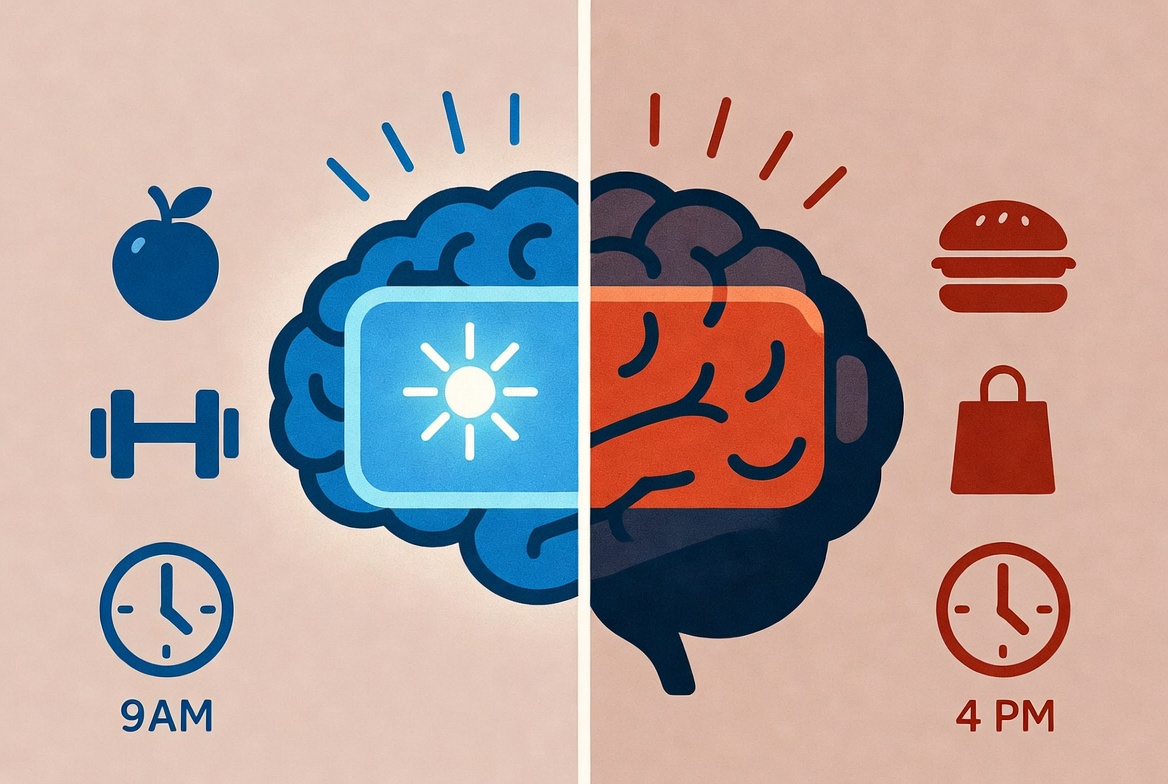
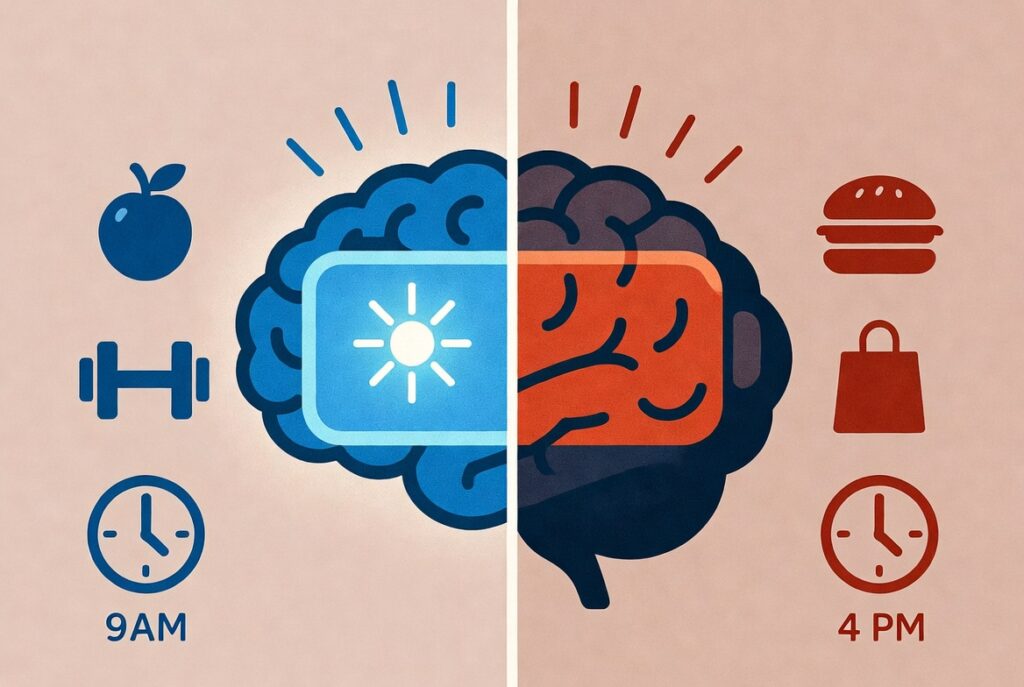
Have you ever noticed that by late afternoon, you’re more likely to order fast food instead of cooking, skip the gym, or say “yes” to something you would have refused in the morning? This isn’t a coincidence or a lack of willpower. It’s a well-documented psychological phenomenon called decision fatigue, and it explains why your brain quietly becomes worse at making choices as the day goes on.
Decision fatigue is one of the most fascinating discoveries in modern psychology, and once you understand how it works, you start noticing it everywhere — in your own daily choices, in the habits of successful people, and even in high-stakes environments like courtrooms and hospitals.
What Exactly Is Decision Fatigue?
Decision fatigue describes the gradual decline in the quality of your decisions after a long session of decision-making. Every choice you make — from picking an outfit to answering emails to deciding what to eat — draws on a limited mental resource. Psychologists sometimes compare this resource to a muscle: it performs well at first, but with repeated use, it tires out and starts to underperform.
This doesn’t mean you become incapable of deciding anything. Instead, your brain starts looking for shortcuts. It becomes more likely to avoid decisions altogether, default to the easiest option, or act impulsively instead of thinking things through. This is precisely why so many people report making their worst choices — snacking on junk food, procrastinating, or losing patience — in the late afternoon or evening.
The Famous Study That Proved It
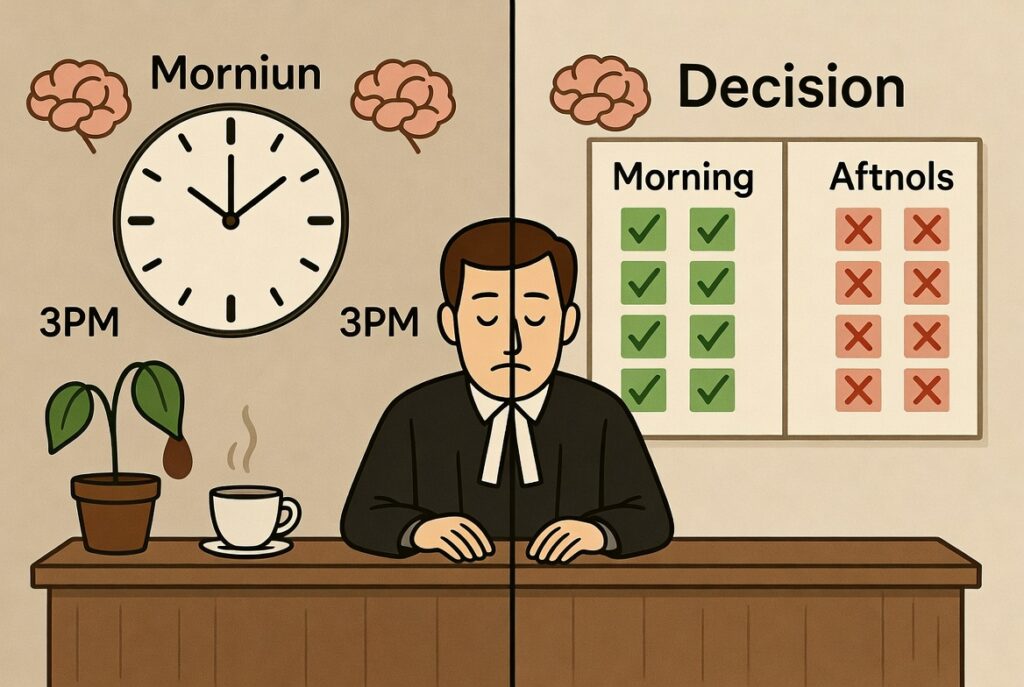
One of the most cited examples of decision fatigue comes from a study of parole board judges. Researchers found that judges were significantly more likely to grant parole early in the morning or right after a break, while approval rates dropped sharply as the day went on — sometimes falling close to zero by the time the judges hadn’t eaten or rested in hours. After a short break, approval rates jumped back up again.
This pattern wasn’t about the cases becoming weaker throughout the day. It was about the judges’ mental resources becoming depleted. Trained legal professionals, making decisions that affected people’s freedom, were still vulnerable to the same biological limits as everyone else. If decision fatigue can influence outcomes in a courtroom, it’s easy to see how it shapes everyday choices for the rest of us.
This groundbreaking research was published in the Proceedings of the National Academy of Sciences, one of the most respected scientific journals in the world, giving strong credibility to the existence of decision fatigue in real-world settings.
Why This Happens: The Brain’s Limited Battery
To understand decision fatigue, it helps to think about how the brain allocates energy. The prefrontal cortex — the part of the brain responsible for planning, self-control, and weighing options — is metabolically expensive to run. Every decision, no matter how small, uses up glucose and mental energy in this region.
Early in the day, after rest, this “battery” is relatively full. But each decision, whether it’s choosing what to wear, responding to a stressful email, or debating what to have for lunch, drains a little more of that reserve. By mid-afternoon, many people have already made hundreds of micro-decisions without realizing it, leaving far less capacity for the important choices that come later.
This is why some of the most successful entrepreneurs in modern history have talked about wearing the same outfit every day or automating simple routines — not out of eccentricity, but as a deliberate strategy to preserve mental energy for decisions that actually matter.
The Sneaky Ways Decision Fatigue Shows Up
Decision fatigue doesn’t always look like obvious indecision. It often disguises itself as:
- Impulse buying — grabbing items at checkout you wouldn’t normally consider
- Emotional eating — reaching for sugar or comfort food as a mental shortcut
- Procrastination — putting off a task simply because deciding how to start feels exhausting
- Snapping at people — reduced patience because self-control is also a limited resource
- Defaulting to “no” or “yes” — agreeing to plans or requests just to avoid the effort of weighing them properly
Recognizing these patterns is the first step to working around them, rather than blaming yourself for a lack of discipline that was never really the issue.
How to Fight Back Against Decision Fatigue
The good news is that decision fatigue is predictable, which means it’s also manageable. Here are strategies backed by behavioral science:
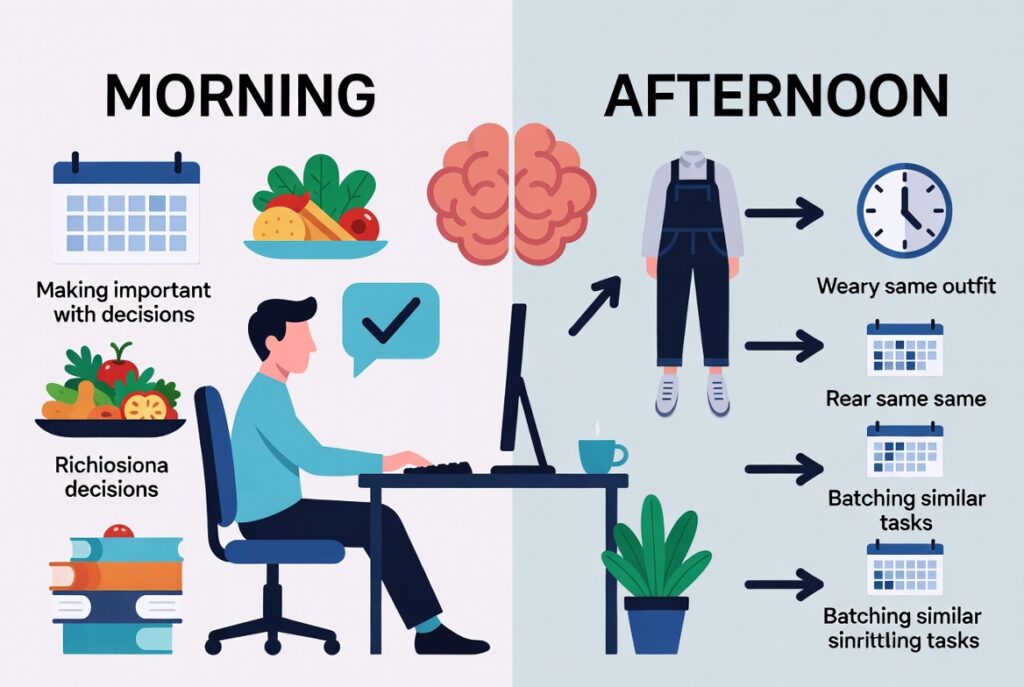
1. Make important decisions early. Schedule your most critical choices — big meetings, financial decisions, difficult conversations — for the morning, when your mental resources are freshest.
2. Reduce trivial decisions. Simplify routines that don’t need daily variation, such as meals, outfits, or your morning schedule. Every decision you eliminate preserves energy for the ones that matter.
3. Take real breaks. Short breaks — even five to ten minutes — allow the brain to partially recover, similar to how the parole judges’ approval rates recovered after a pause.
4. Feed your brain. Since decision-making relies heavily on glucose, staying properly nourished throughout the day helps maintain mental stamina longer.
5. Batch similar decisions. Grouping similar tasks together, like answering all emails at once instead of throughout the day, reduces the mental switching cost that accelerates fatigue.
Decision Fatigue in the Workplace
Decision fatigue doesn’t just affect personal choices — it has a measurable impact on professional performance. Managers who spend all morning approving requests, resolving conflicts, and making strategic calls often find their afternoon decisions noticeably weaker, whether that means rushing through a performance review or approving a proposal without properly evaluating it. Companies that understand decision fatigue have started restructuring workflows around it: scheduling high-stakes meetings before lunch, limiting unnecessary approval chains, and encouraging employees to batch low-priority tasks into a single block of time. This isn’t just a productivity trend — it’s a direct response to how decision fatigue quietly erodes judgment throughout a workday, often without anyone realizing why quality drops as the hours go by.
The Digital Age Is Making Decision Fatigue Worse
Modern life has added a new layer to decision fatigue that didn’t exist a generation ago: constant digital choice. Streaming platforms present endless menus of shows, social media feeds require ongoing micro-decisions about what to like or scroll past, and even simple tasks like replying to messages now involve dozens of small choices throughout the day. Some researchers argue that this steady stream of low-stakes digital decisions accelerates decision fatigue earlier than it would have occurred in previous decades, leaving people mentally drained before they even reach the choices that truly matter. Recognizing this pattern has led to a growing interest in digital minimalism — deliberately reducing daily digital decisions as a way to preserve mental energy for more important parts of life.
Why Understanding This Matters
Decision fatigue isn’t a character flaw — it’s a biological limit built into how the human brain works. Understanding it can change how you structure your day, how you judge your own “bad” choices in the evening, and even how you view other people’s behavior when they seem uncharacteristically impatient or careless late in the day.
The next time you find yourself making a questionable decision at 4 PM that you never would have made at 9 AM, remember: it’s not that you got worse at making choices. Your brain simply ran out of its daily supply of mental energy — and now you know exactly why.
This mental overload connects to a broader issue explored in our article on the history of passwords and digital security, where constant small decisions — like remembering dozens of logins — add another invisible layer of daily fatigue.