
How to Build a High-Income Skill From Zero in 2026
Learning a high-income skill can be a practical way to increase your earning potential without waiting years for a promotion or returning to school.
That does not mean there is a secret skill that guarantees a high salary. There isn’t.
A high-income skill is simply an ability that solves a valuable problem and can be turned into a service that people or businesses are willing to pay for. Copywriting, web design, video editing, digital marketing, and sales are a few examples.
The difficult part is not finding information. In 2026, information is everywhere. Free tutorials, online communities, software, and artificial intelligence tools make learning more accessible than it once was.
The difficult part is turning information into ability.
You need to practice, create something that demonstrates what you can do, find people who might need it, and learn how to communicate the value of your work.
This guide explains how to choose one skill, develop it over 90 days, build a simple portfolio, find potential clients, and avoid the mistakes that cause many beginners to give up too early.

What Is a High-Income Skill?
The term “high-income skill” is often used online as if learning the right skill automatically leads to a large income. That is misleading.
Income depends on several factors, including demand, experience, specialization, location, competition, communication, and the ability to find customers.
A useful way to think about a high-income skill is this:
It is an ability that can produce a result valuable enough for someone else to pay for it.
For example, knowing how to use a video-editing program is not necessarily a valuable service by itself. But creating short videos that help a business communicate with potential customers is something a company may be willing to pay for.
The same principle applies to writing, design, marketing, sales, and other professional skills.
Your goal is therefore not simply to “learn a skill.”
Your goal is to learn how to solve a problem with that skill.
Why Skill-Building Matters in 2026
The skills businesses need are changing as technology, artificial intelligence, and digital work become more common.
The World Economic Forum’s Future of Jobs Report 2025 estimates that about 39% of workers’ existing skill sets could be transformed or become outdated between 2025 and 2030. Analytical thinking remains an important core skill, while AI and big data, networks and cybersecurity, and technological literacy are among the fastest-growing areas.
https://www.weforum.org/publications/the-future-of-jobs-report-2025
Artificial intelligence is also becoming part of everyday work rather than remaining a niche technology.
The Federal Reserve’s 2026 report on the economic well-being of U.S. households found that one in four workers had used generative AI at work during the previous month. Among workers who used it, saving time was one of the most commonly reported benefits.
This does not mean that everyone needs to become an AI specialist. It does suggest that people who combine an existing professional ability with modern tools may have an advantage.
Independent work is also an established part of the U.S. labor market. The latest available BLS Contingent and Alternative Employment Arrangements data found that 11.9 million people were independent contractors in July 2023, representing 7.4% of total employment.
https://www.bls.gov/news.release/archives/conemp_11082024.htm
That figure should not be treated as a 2026 measurement. It is the latest published BLS snapshot for this particular survey.
Five High-Income Skills Beginners Can Consider
There is no universally best choice. The right skill depends on what you enjoy, what you can practice consistently, and whether there is a market for the service.
| Skill | Example Service | Beginner Advantage | Main Challenge |
|---|---|---|---|
| Copywriting | Emails, landing pages, product copy | Easy to create samples | Requires strong research |
| Digital marketing | Social media or SEO support | Broad business demand | Results depend on many factors |
| Web design | Small business websites | Easy to demonstrate visually | Requires technical knowledge |
| Video editing | Shorts, Reels, YouTube videos | Strong portfolio potential | Requires practice and speed |
| Sales | Lead generation and follow-up | Useful across industries | Rejection can be difficult |

Copywriting
Copywriting involves writing content designed to encourage a specific action, such as making a purchase, requesting information, or signing up for something.
A beginner can practice by creating sample emails, advertisements, product descriptions, and landing pages.
The advantage is that you can create a portfolio without expensive equipment.
The challenge is that effective copy requires more than good grammar. You need to understand the audience, the offer, and the reason someone should care.
Digital Marketing
Digital marketing is a broad field, so beginners should avoid trying to master everything at once.
A better approach is to choose one area, such as social media management, SEO content, email marketing, or local search optimization.
For example, “I help local restaurants improve their social media content” is a much clearer offer than simply saying “I do digital marketing.”
Web Design
Small businesses need websites, landing pages, and online service pages.
You can begin with website builders and content management systems rather than learning advanced programming immediately.
However, good web design requires more than making a page look attractive. Mobile usability, navigation, typography, accessibility, performance, and clear calls to action all matter.
Video Editing
Video editing is particularly suitable for people who enjoy visual work.
Start with one format instead of trying to master everything. Short-form content, for example, gives you an opportunity to practice cutting, captions, audio, pacing, and storytelling.
A strong before-and-after example can often communicate your ability better than a long description of your skills.
Sales
Sales is one of the most transferable skills on the list.
Businesses need people who can find prospects, understand customer needs, qualify leads, follow up, and communicate the value of a product or service.
The biggest challenge is psychological. Rejection is part of sales, and beginners need to become comfortable hearing “no” without treating it as personal failure.
How to Choose One Skill
Don’t choose a skill because someone online promises that it will make you rich.
Ask three questions instead:
Can I practice this consistently?
Are businesses already paying for this service?
Can I create examples of my work without a large investment?
That last question is particularly important.
If you want to learn web design, you can build sample websites.
If you want to learn copywriting, you can create sample campaigns.
If you want to learn video editing, you can produce sample videos.
Your first projects do not need to be perfect. They need to exist.
If you are still unsure which abilities are worth developing, our guide to https://infoisthekey.com/most-valuable-skills-to-earn-more-money/ explores the broader relationship between valuable skills and earning potential.
A Practical 90-Day Plan
Days 1–30: Learn and Practice
Choose one skill and learn the fundamentals.
Use free or inexpensive resources, but avoid spending the entire month watching tutorials.
Every learning session should lead to practical work.
If you’re learning copywriting, write.
If you’re learning web design, build.
If you’re learning video editing, edit.
Your goal during the first month is to become capable of producing basic work without constantly needing someone else to show you what to do.
Days 31–60: Build Your Portfolio
Create three to five strong examples.
You don’t need dozens.
For each project, explain:
- What you created
- What problem it addresses
- Why you chose your approach
- What you would improve
Practice projects are completely acceptable. Just label them honestly.
Never invent clients, testimonials, revenue figures, or performance results.
A fictional project presented as a fictional project can still demonstrate creativity and technical ability.
Days 61–90: Start Looking for Clients
Once you have something credible to show, begin contacting potential clients.
You can use:
- Direct outreach
- Freelance platforms
- Referrals
- Networking
- Local businesses
- Professional communities
- Job boards
A simple starting routine is five to ten personalized messages per week.
That is not a guaranteed formula for getting clients. It is simply enough activity to give a beginner practice without turning outreach into a full-time job.
Avoid generic messages.
Instead of saying:
“Hi, I am a freelancer. Do you need help?”
identify something specific.
For example:
“I noticed your business has several useful services, but the information is difficult to find on mobile. I created a quick example of how I would simplify the page.”
The point is to demonstrate that you understand the potential client’s situation.
How Much Should You Charge?
There is no universal beginner rate.
Your price depends on your market, experience, specialization, location, project complexity, and the value of the result.
The following figures are illustrative starting ranges, not promises:
| Service | Example Beginner Offer | Illustrative Range |
|---|---|---|
| Copywriting | Email or short sales copy | $50–$150 |
| Digital marketing | Basic monthly support | $300–$800/month |
| Web design | Simple business website | $500–$2,000 |
| Video editing | Short-form editing | $30–$100/hour |
| Sales support | Prospecting and lead qualification | $20–$50/hour or commission |
These numbers can vary considerably between markets.
When calculating an hourly rate, remember that not every hour spent working is necessarily billable. Upwork’s rate guidance explains that freelancers need to account for non-billable activities such as proposals, administration, and other business tasks.
https://support.upwork.com/hc/en-us/articles/34926076728467-Determine-your-rate
That is an important lesson for beginners. If you spend ten hours working on your business but only six hours are paid by clients, your rate needs to reflect the other four hours as well.
Don’t Compete Only on Price
Starting at a reasonable price can make sense when you have no portfolio.
Staying cheap forever does not.
Instead of trying to become the least expensive freelancer, make your offer specific.
“I edit videos” is vague.
“I turn one long YouTube video into five captioned Shorts” is much easier for a potential customer to understand.
As your ability, portfolio, and demand improve, you can adjust your pricing.
The goal is to become more useful, not simply cheaper.
How AI Changes the Learning Process
AI can make certain tasks faster, but it does not remove the need to understand the work.
You can use AI to brainstorm, organize research, generate ideas, create drafts, explain concepts, or automate repetitive tasks.
But the final responsibility remains with you.
If you don’t understand copywriting, you may not recognize weak AI-generated copy.
If you don’t understand research, you may not notice an inaccurate claim.
If you don’t understand video editing, you may not recognize why a video feels slow.
The best approach is to use AI as an assistant while keeping human judgment in charge.
That combination is likely to become increasingly common as AI tools become part of ordinary professional workflows.
Mistakes That Hold Beginners Back
Learning Too Many Skills
Trying to learn five things simultaneously usually produces shallow knowledge.
Start with one.
Watching Instead of Practicing
Another tutorial can feel productive, but finished work is what develops ability.
Waiting for a Perfect Portfolio
Your first portfolio will not be your best.
Create it anyway.
Inventing Experience
Never create fake testimonials or pretend a fictional project was completed for a real client.
Trust is difficult to build and easy to lose.
Depending Completely on AI
AI can speed up production, but blindly accepting its output can create inaccurate or generic work.
Review everything.
Quitting Stable Income Too Early
One client is not proof of stable income.
If you already have a job, building your new skill alongside it can give you time to test the market without immediately putting your finances at risk.
Once you start earning additional money, our guide to https://infoisthekey.com/save-500-in-30-days/ explains one practical way to turn some of that income into a small financial cushion.
For readers looking for immediate, low-cost ways to earn while developing a longer-term skill, see https://infoisthekey.com/side-hustles-no-money-2026/.
And if your skill begins producing online income, https://infoisthekey.com/make-money-online-2026/ covers additional ways to approach that process.
Frequently Asked Questions
Do I need a degree to learn a high-income skill?
Not necessarily.
Many digital services can be demonstrated through practical work and a portfolio. However, some professions require specific education, licenses, or certifications.
How long does it take to learn a high-income skill?
There is no universal timeline.
A 90-day plan is useful for building fundamentals, creating portfolio samples, and testing the market. It is not a guarantee that you will become an expert or find a client within 90 days.
Can I learn while working full time?
Yes. Consistency matters more than trying to study for extremely long hours once in a while.
Ten focused hours per week can produce meaningful progress over several months.
What if nobody responds to my outreach?
Review your offer before simply sending more messages.
You may be targeting the wrong businesses, explaining your service poorly, or showing work that does not match what potential clients need.
How many portfolio projects do I need?
Three to five strong examples are a reasonable starting point.
Focus on quality and relevance rather than quantity.
Should I work for free?
You don’t need to work for free to gain experience.
You can create practice projects, offer a small paid trial, or work on personal projects that demonstrate your ability.
When should I raise my rates?
Consider increasing your rates when your portfolio improves, you gain successful projects, demand increases, or your current workload becomes difficult to manage at the existing price.

Conclusion
Building a high-income skill in 2026 is not about finding a shortcut to wealth.
It is about becoming useful.
Choose one skill. Practice it consistently. Build evidence of what you can do. Find people who have a problem you can solve. Then improve based on what happens.
Your first project may be imperfect. Your first offer may not work. Your first client may take longer to find than expected.
That is normal.
What matters is creating a repeatable process:
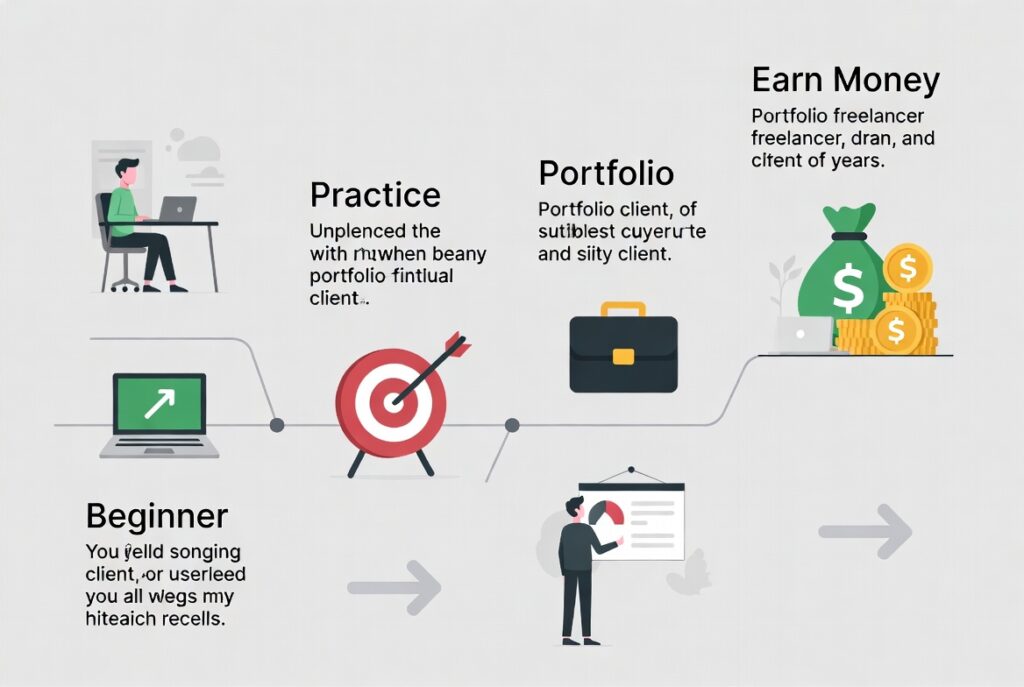
Learn → Practice → Build → Show → Sell → Improve.
Give that process serious attention for 90 days before deciding whether the skill is worth pursuing further.
You may eventually use it for freelance income, a new career, a side business, or simply to become more valuable in your current job.
The important first step is choosing one useful skill and actually starting.
About the Author
Lucas is the founder and editor of Info Is The Key. He researches and writes about money, practical skills, history, world affairs, and other subjects that help readers make more informed decisions. His work emphasizes clear explanations, practical examples, and responsible use of publicly available sources.
Last Updated: August 2026 | Reading Time: 12 minutes
Sources
U.S. Bureau of Labor Statistics — Contingent and Alternative Employment Arrangements, July 2023.
Federal Reserve — Report on the Economic Well-Being of U.S. Households in 2025.
World Economic Forum — Future of Jobs Report 2025.
Upwork — Determine Your Rate.