
The history of passwords goes back much further than most people realize. Every time you type a password or glance at your phone to unlock it, you’re taking part in a tradition that’s thousands of years older than the internet itself. The idea of proving “I am who I say I am” through a secret word or sign is ancient — but the way we do it has changed more in the last 20 years than in the previous 2,000. This is the history of passwords in its full arc: from whispered secret words at castle gates to unlocking a phone with nothing but a glance.
Long Before Computers: The Ancient Origins of Secret Words
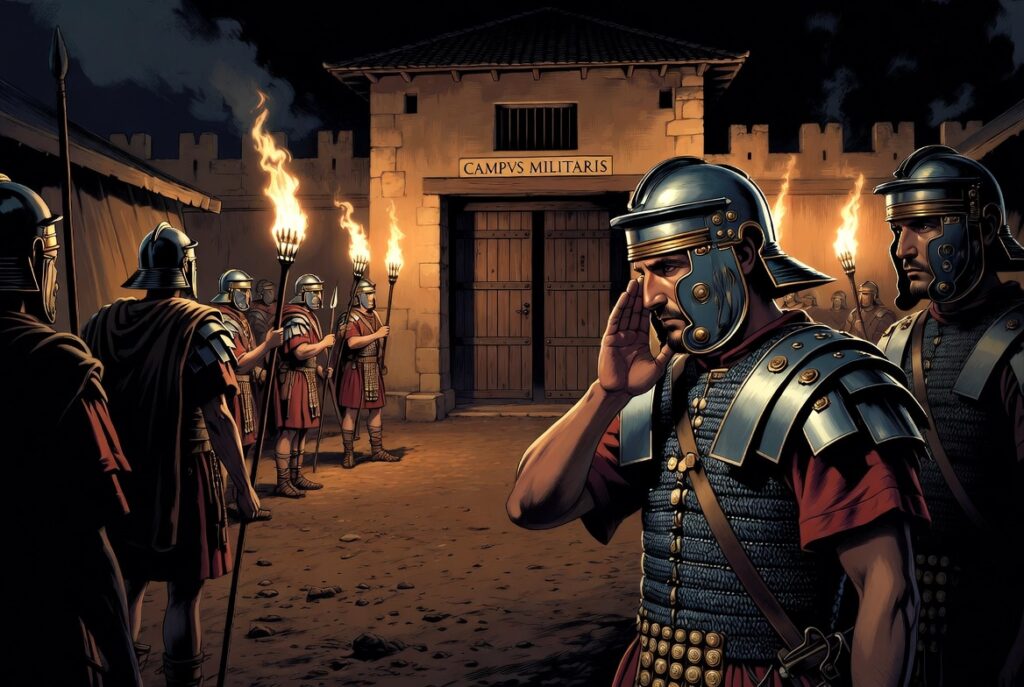
The concept of a password didn’t start with technology — it started with survival. Roman military camps used what they called a “watchword,” a secret term changed daily and passed down the ranks so soldiers could identify friend from foe in the dark. Getting it wrong could mean being mistaken for the enemy.
This same idea shows up across history in different forms: secret handshakes between merchants, coded phrases used by resistance movements, and even the folktale image of a guard demanding “the password” before opening a gate. The pattern is always the same — a piece of secret knowledge acts as proof of identity or belonging.
What’s fascinating is that this ancient system had the same weaknesses passwords have today: if the secret leaked, the whole system broke down. Humans have been fighting this same battle for millennia — we just didn’t call it “cybersecurity” yet.
This early chapter in the history of passwords shows that the core problem — proving identity through a shared secret — is far older than any computer.
The First Digital Password: MIT, 1961
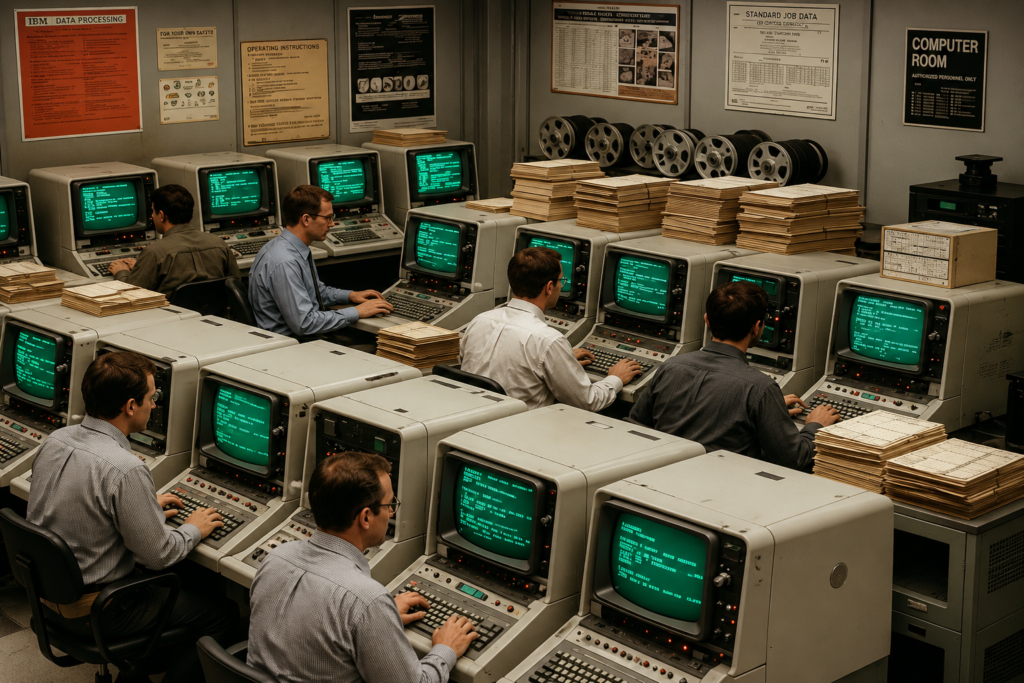
The password as we know it today — a private string of characters used to access a computer — was born out of a practical problem, not a security concern. In 1961, MIT built one of the first time-sharing computer systems, allowing multiple researchers to use the same machine. The problem? Everyone needed their own private space to store files without other users snooping around.
The solution was simple: each user got a password. It wasn’t designed to stop hackers — hacking as we know it didn’t really exist yet — it was designed to keep colleagues out of each other’s files. Ironically, within a few years, researchers were already finding ways to steal each other’s passwords, marking the beginning of the endless cat-and-mouse game between security and exploitation that continues today.
By the 1970s and 80s, as personal computers and early networks spread, passwords became the default way to protect everything from bank systems to email. It was cheap, easy to implement, and required no special hardware — just a keyboard and a bit of memory.
This moment marks a turning point in the history of passwords, since it introduced the concept still used by nearly every website today.
The Password Problem: Why a Simple Idea Became a Massive Headache
History of passwords worked well when people had one or two accounts to remember. But as the internet exploded, the average person went from managing a single password to juggling dozens — email, banking, social media, streaming services, work logins.
This created what security experts now call “password fatigue.” Studies have consistently shown that most people reuse the same password across multiple sites, use predictable patterns, or choose weak combinations just to make remembering easier. This single habit has been responsible for a huge share of major data breaches over the past two decades, since one leaked password can unlock accounts on completely unrelated platforms.
Companies responded by demanding more complexity: uppercase letters, numbers, symbols, minimum lengths. But this often backfired — people started writing passwords down, storing them in unprotected notes, or using slightly modified versions of the same core password everywhere. The system built to protect us was, paradoxically, becoming a source of vulnerability.
It’s one of the most ironic chapters in the history of passwords: a system built for protection became a widespread vulnerability.
Adding a Second Lock: The Rise of Two-Factor Authentication
By the 2010s, it became clear that a password alone — no matter how complex — wasn’t enough. This led to the widespread adoption of two-factor authentication (2FA): a system requiring not just something you know (your password) but something you have, like a code sent to your phone, or something you are, like a fingerprint.
These recommendations align with the NIST Digital Identity Guidelines, which now advise against forced periodic password changes and favor stronger methods like multi-factor authentication.
2FA dramatically reduced the success rate of stolen-password attacks, since even if a hacker got your password, they’d still need access to your phone or another device. Banks, email providers, and social media platforms rapidly adopted this as a standard security layer, training an entire generation of internet users to expect a second step beyond the traditional password.
Biometrics: When Your Body Became the Password
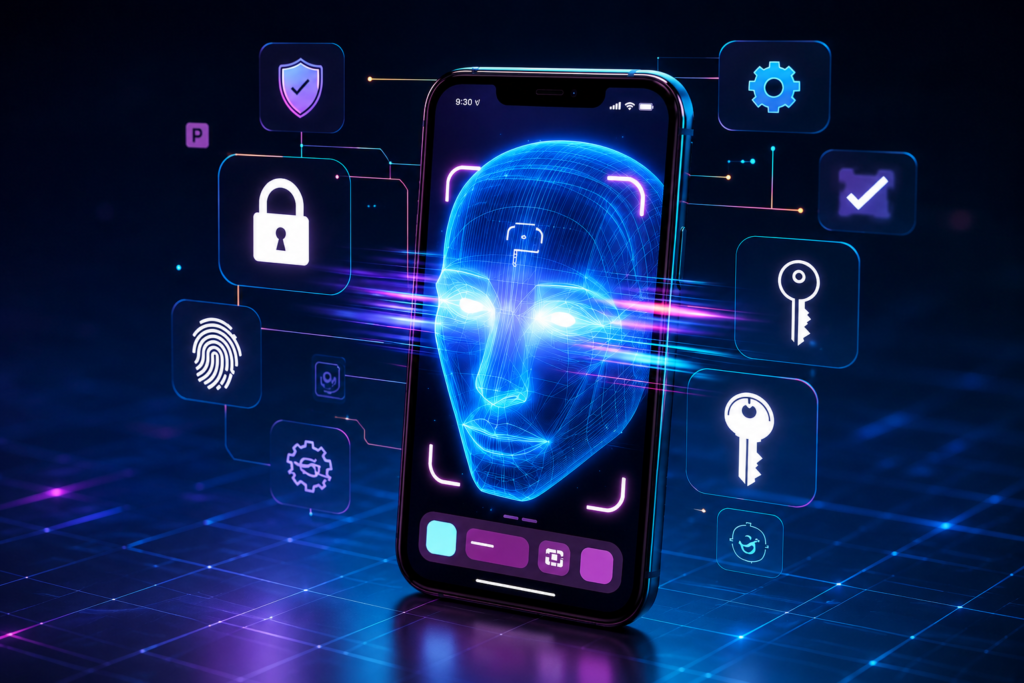
The most dramatic shift in this history came with biometrics — using physical characteristics instead of memorized information. Fingerprint scanners appeared on smartphones in the early 2010s, offering something passwords never could: a form of identification that couldn’t be forgotten, guessed, or easily stolen.
Then came facial recognition. When Face ID launched on smartphones, it represented a fundamental change in how we think about digital identity. Instead of proving who you are through something you memorized, you prove it through something you simply are. Your face, your fingerprint, even the unique way you walk or type — these have become the new frontier of authentication.
This shift matters because biometric data is fundamentally different from a password. You can change a leaked password in seconds; you cannot change your face or fingerprint if that data is ever compromised. This has sparked ongoing debates among privacy experts and lawmakers about how biometric data should be stored, encrypted, and regulated — a conversation that’s still evolving today.
What Comes Next: A Password-Free Future?
The latest chapter in this story is the rise of “passkeys,” a technology backed by major tech companies including Apple, Google, and Microsoft. Passkeys aim to eliminate traditional passwords entirely, replacing them with cryptographic keys stored securely on your device and unlocked using your fingerprint, face, or device PIN.
The logic is simple: if there’s no password to steal, there’s no password to leak in a data breach. Early adoption has been growing steadily, and many experts believe passkeys — or a similar successor technology — will eventually make the traditional password feel as outdated as the Roman watchword feels to us today.
The Bigger Lesson
The history of passwords is really the history of trust in the digital age — how we prove who we are to machines, to companies, and to each other. From a whispered word at a Roman camp gate to a glance at a smartphone screen, the core challenge has never changed: how do you prove your identity without giving that proof away to someone else?
Looking back at the full history of passwords makes it clear why the shift toward biometrics and passkeys felt inevitable.
What has changed is the sophistication of the answer. We’ve moved from something you memorize, to something you carry, to something you simply are. And if current trends continue, the next generation may grow up never having typed a traditional password at all — a strange thought for anyone who still remembers scribbling passwords onto sticky notes.
This shift mirrors a broader pattern already reshaping daily life — much like how artificial intelligence and ChatGPT are transforming the future of work, authentication technology is evolving faster than most people realize.