
Football has just witnessed something that has never happened before: the first-ever 48-team World Cup. For nearly three decades, the tournament followed the same familiar structure — 32 nations, eight groups, a straightforward path to the Round of 16. In 2026, all of that changed. Co-hosted across the United States, Mexico, and Canada, this edition isn’t just bigger in scale — it’s structurally a different competition altogether, and understanding how it works has become one of the most searched football topics in the world right now.
What Makes the 48-Team World Cup Different
Since 1998, the World Cup had stuck to a 32-team format: eight groups of four, with the top two from each group advancing directly to the Round of 16. The 48-team World Cup breaks that mold entirely. FIFA expanded the field from 32 to 48 nations, which meant the entire tournament structure needed to be redesigned from the ground up rather than simply patched onto the old system.
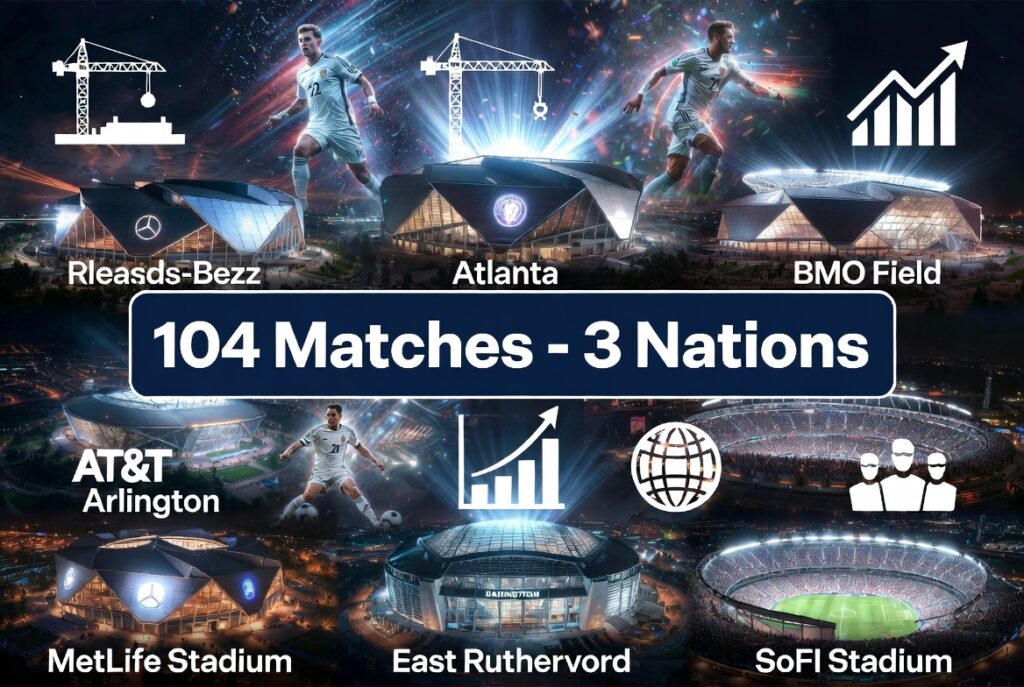
The most visible change isn’t just the extra teams — it’s the extra matches. Where past tournaments featured 64 games, this expanded edition includes a total of 104 matches spread across 16 host cities, played over 39 days. That’s roughly a 68% increase in matches compared to the traditional format, transforming the World Cup into a genuinely month-long global event rather than a tightly packed few weeks.
How the Group Stage Works Now
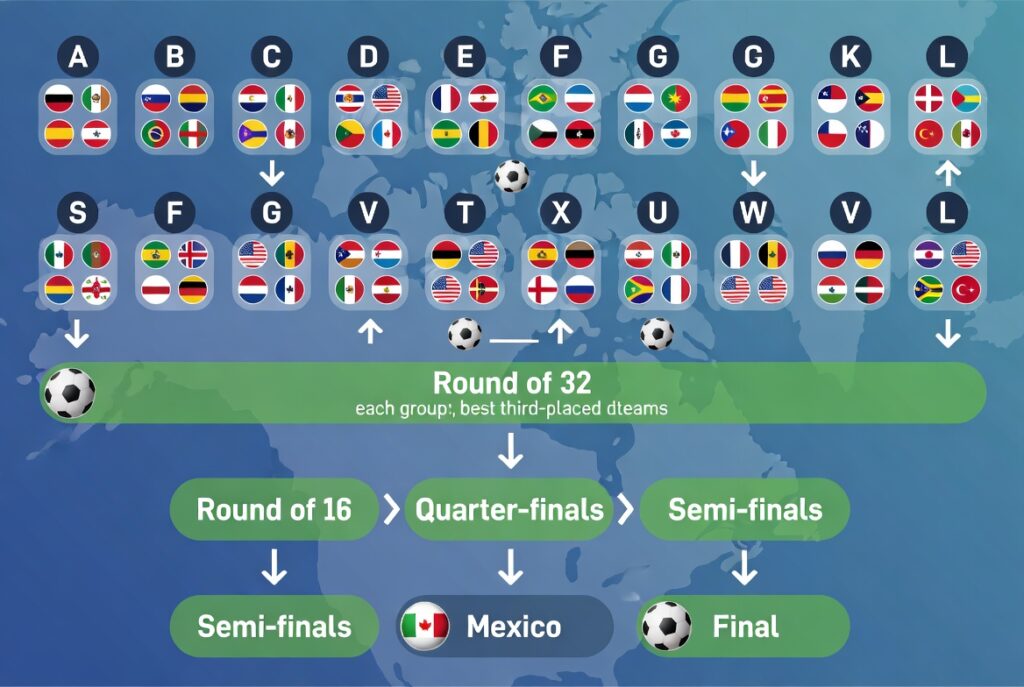
In the 48-team World Cup, the 48 qualified nations are split into 12 groups of four (Groups A through L). Each team plays the other three sides in its group exactly once — a familiar round-robin format that hasn’t changed. What’s new is what happens after those three matches are played.
Instead of only the top two teams advancing, FIFA introduced a “best third-place” rule. After the group stage, all 12 third-place finishers are ranked against each other using a tiebreaker system based on points, goal difference, and goals scored. The eight best-performing third-place teams earn a spot in the knockout stage alongside the 24 group winners and runners-up. This single rule change fundamentally altered how teams approach their group matches, since even a third-place finish can now keep a nation alive — a sharp contrast to older tournaments, where finishing third meant automatic elimination.
For the complete official breakdown of qualification rules and tiebreakers, the FIFA World Cup 2026 official format guide remains the most reliable reference available.
The Brand-New Round of 32
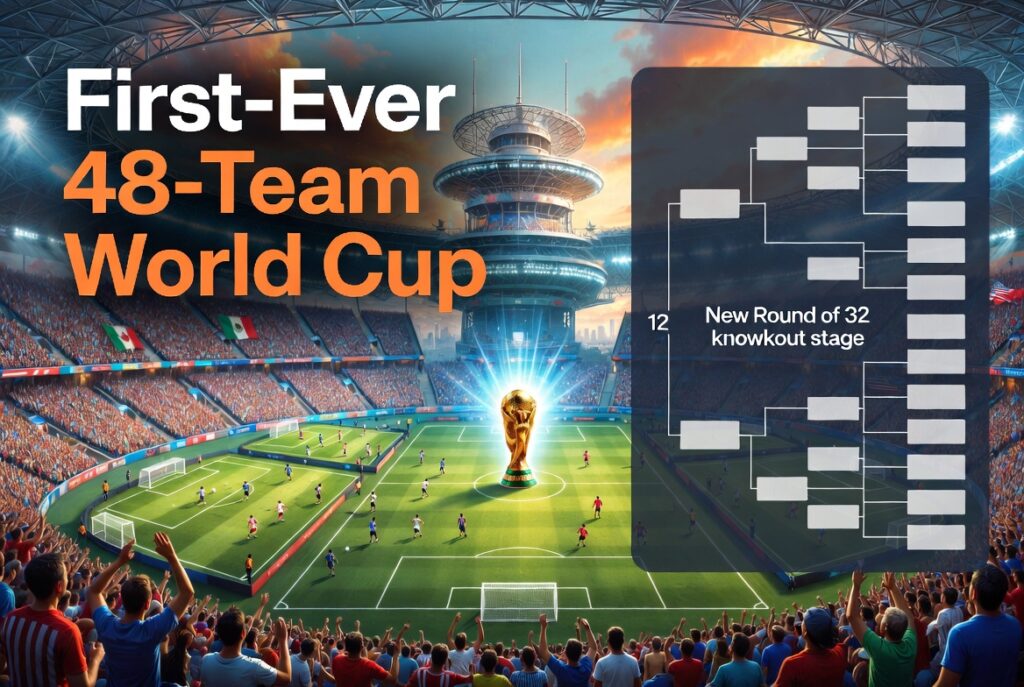
Perhaps the most significant structural addition in the entire 48-team World Cup format is the Round of 32 — a knockout stage that has never existed in a men’s World Cup before. Under the old 32-team system, 16 teams went straight from the group stage into the Round of 16. Now, 32 teams enter this brand-new first knockout round, adding an entirely new layer of do-or-die football before the tournament reaches its more familiar later stages.
From the Round of 32 onward, the competition becomes pure single elimination: Round of 16, quarter-finals, semi-finals, and finally the Final. Because of this extra round, the two finalists in the 48-team World Cup will each play eight matches over the course of the tournament — one more than finalists had to play in any previous edition. For players and coaching staff, this adds an extra physical and tactical test that simply didn’t exist in older tournaments.
Host Cities and the Travel Challenge
Unlike any previous edition, the 48-team World Cup is shared across three countries at once — the United States, Mexico, and Canada — with matches distributed across 16 stadiums. This cross-border format introduces logistical challenges that teams have never had to plan for at this scale, including cross-country flights between matches, multiple time zones, and varying climates depending on the host city.
For fans, this also means the tournament experience looks different depending on location: some cities host only group-stage matches, while others are selected specifically for knockout rounds and the Final. Broadcasters and travel organizers have had to build entirely new logistical frameworks around a tournament that, in previous decades, was typically confined to a single host country.
Star Performances Reshaping the Record Books
The expanded format hasn’t just changed the structure of the tournament — it has also created new opportunities for individual records to fall. With more matches and a longer path to the trophy, several veteran players have used the extended tournament to rewrite World Cup history books, breaking individual goal-scoring records that had stood for over a decade. The larger format effectively adds more games in which milestone performances can happen, making this edition a landmark tournament for individual achievements as well as team success.
The Economic Scale of the 48-Team World Cup
Beyond the pitch, the 48-team World Cup represents a massive economic undertaking for all three host nations. Host cities have invested heavily in stadium upgrades, transportation infrastructure, and hospitality capacity to accommodate the largest number of visiting fans in tournament history. With 104 matches instead of 64, broadcasters have also had to restructure their coverage plans entirely, expanding the number of simultaneous production crews, commentary teams, and daily broadcast windows needed to cover matches happening across three different time zones on the same day.
This economic scale extends to sponsorship and advertising as well. A longer tournament with more matches naturally creates more commercial windows, which is part of why analysts have described the format expansion as being driven as much by long-term revenue potential as by competitive inclusivity. For host cities, the tournament is expected to leave behind lasting infrastructure, from upgraded stadiums to improved public transit systems built specifically to handle World Cup crowds.
How Fans Are Following the Action
The sheer size of the 48-team World Cup has also changed how fans engage with the tournament day to day. With up to three or four matches played simultaneously across different time zones, tracking group standings, third-place rankings, and the evolving knockout bracket has become noticeably more complex than in previous editions. Fans have increasingly relied on live bracket trackers and standings tools to keep up with which teams are still alive at any given moment, especially during the tense final days of the group stage when third-place rankings can shift with each result.
This added complexity has, in many ways, made the tournament more engaging rather than less — every group match now carries extra weight, since even a team finishing third still has a mathematical path to the knockout rounds depending on results happening in completely different stadiums on the same day.
Why FIFA Expanded the Tournament
The decision to grow the World Cup wasn’t just about adding drama — it reflects a broader shift in how FIFA views the tournament’s purpose. Expanding to 48 teams gives more nations across smaller or emerging football confederations a realistic chance to qualify for football’s biggest stage, something that was nearly impossible under the tighter 32-team format.
Critics have pointed out that a bigger tournament could dilute overall match quality, since some qualifying nations are competing at this level for the first time. Supporters counter that the new Round of 32 actually preserves the competitive intensity that fans expect, simply spreading it across an additional stage rather than removing it.
What the 48-Team World Cup Means for the Future
Whether or not the expanded format becomes the permanent standard, the 48-team World Cup has already reshaped how future tournaments will likely be structured. It has proven that FIFA is willing to fundamentally redesign the competition rather than simply add more teams to the existing framework, introducing genuinely new knockout stages when needed.
For casual fans and lifelong football followers alike, the 2026 tournament represents a turning point: bigger, longer, and structurally unlike anything that came before it. Regardless of how the debate around quality versus inclusivity plays out in the years ahead, one thing is clear — the days of the simple 32-team World Cup bracket are, for now, over.
If you want to understand the human side of this historic tournament, read about Lionel Messi’s record-breaking career and the inspiring story behind his World Cup legacy.